I’ve got to be honest about something. I don’t do this.
The last Field Notes on this site was about marking the passages of life. A hike at the start of a new chapter. Burning old letters and watching the fire. Paying full attention to something precisely because it won’t come again. I read the thinkers behind it and nodded along the way you nod at good advice you have no intention of taking.
Then someone asked me, plainly, which of my own endings I had marked. I couldn’t come up with one.
Lots of things have ended in my life. Jobs, chapters, versions of myself. The biggest by far was losing my parents. They died a few years apart. My dad has been gone six years now.
And here’s what I did both times. I went back to life.
Back to Life
I don’t say that with shame, exactly. It’s what most of us were trained to do. You handle what needs handling. You show up for the people who need you to show up. And then, at some point that nobody announces, you’re back at your desk, back in the calendar, back in the rhythm of a full and busy life.
It felt like the right thing. Honestly, it felt like the only thing. Life was where the comfort was. Work that needed me, people I love, plans that kept moving forward. I found more comfort in living than in sitting with the loss, so I lived.
What I didn’t do was stop. I don’t think I fully mourned either of them. Not in the way the people who study grief describe it. There was no deliberate pause, no ritual of my own making, no moment where I said out loud that a chapter of my life had closed because the two people who started it were gone.
For a long time I didn’t think that was a problem. Now I’m not so sure.
What the Thinkers See
Robert Greene, in his new book The Law of the Sublime, argues that we’ve built a culture that hides death. We keep it in hospitals and funeral homes and out of sight. And along the way we’ve lost the rites that used to mark the end of one stage of life and the beginning of the next. His warning is the line that stuck with me: without those rites, people carry old pain into new chapters, because nothing ever told them the old chapter was over.
Stephen Jenkinson, who has spent decades sitting with the dying, goes further. He says the things that matter happen once, and part of honoring them is letting them end. Not pretending they’re still here. Not skipping past the silence that follows.
And I read a theologian named David Weiss this month, a student of Jenkinson’s, who is facing his own mortality. He wrote his children a letter with four commitments, the first of which was to make peace with his own death. I sat with that for a while. I’ve spent a lot of energy making peace with my career, my calendar, my choices. I haven’t spent much on making peace with the endings.
Comfort or Avoidance?
Here’s the honest tension, and I don’t think it resolves neatly.
Part of me believes going back to life was healthy. My parents wanted me to live. Building a full life was, in a real sense, what they raised me to do. There’s something to be said for the comfort of ordinary days, of people around a table, of work that matters. Maybe that was my mourning. Maybe living fully was the ritual.
But another part of me suspects that’s a story I tell because it’s easier. That staying busy is how a lot of us, men especially, keep grief at arm’s length. We don’t refuse to feel it. We just never schedule it. And grief, unlike almost everything else in our lives, doesn’t respond to being scheduled later. It waits. It shows up sideways, in a restlessness we can’t explain, in a quiet distance in the middle of a successful life, in a sense that something is unfinished.
I don’t know which of those is truer for me. I suspect both are.
What I do know is that Greene’s idea won’t leave me alone. An ending you don’t mark doesn’t actually end. If that’s even partly true, then some part of me is still carrying two chapters I never closed.
What Marking Might Look Like
I want to be careful here, because I don’t have a tidy answer, and I’m wary of essays that wrap grief in a bow.
I haven’t figured out what marking these endings looks like for me. I’m not sure it’s a ceremony. It might be smaller. A day set aside, deliberately, to think about them. A trip to a place that was theirs. A letter I write and don’t send. Saying their names out loud in a circle of people who will just listen.
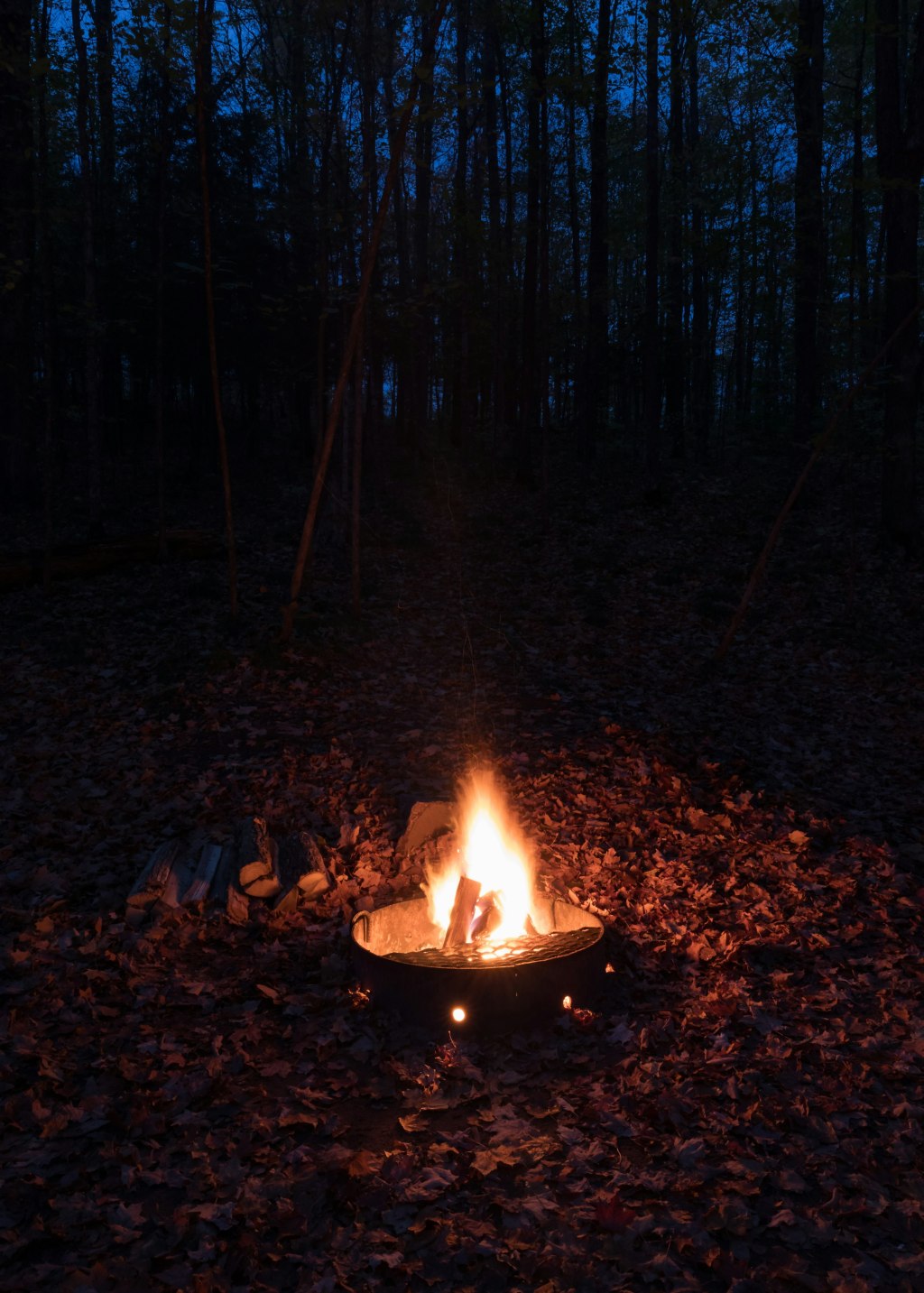
What I’ve learned from this past year in the woods is that the hardest things get easier to face in good company. Out there, endings are built in. Every trip ends, and everyone on it knows it. You don’t get to skip the last night. You sit around the fire and say what it meant. Nobody rushes back to their inbox, because there is no inbox.
Maybe that’s the gift wilderness gives people like me. It teaches us, in a small and safe way, how to let something end. How to pay attention to it while it’s here and say goodbye when it’s done. Practice, in other words, for the endings that matter more.
The Question I’m Carrying
So here’s where I’ve landed, for now.
If you’re in the second half of life, you’ve almost certainly lost someone or something big. A parent. A marriage. A role you thought defined you. And if you’re like me, you probably handled it well, by every outside measure. You went back to life.
The question isn’t whether that was wrong. It’s whether you ever let it end.
I’m still working on my answer. I suspect it starts with something as simple as admitting I skipped a step, and then deciding, six years late, that it’s not too late to take it.
If any of this is your weather too, I’d like to hear about it. And if you’ve found a way to mark an ending that actually worked, I’d especially like to hear that.
Photo by Brett Belcher on Unsplash.
The Trailhead Letter brings each new journal entry to your inbox. Nothing said in a Trailhead circle, and nothing for sale.